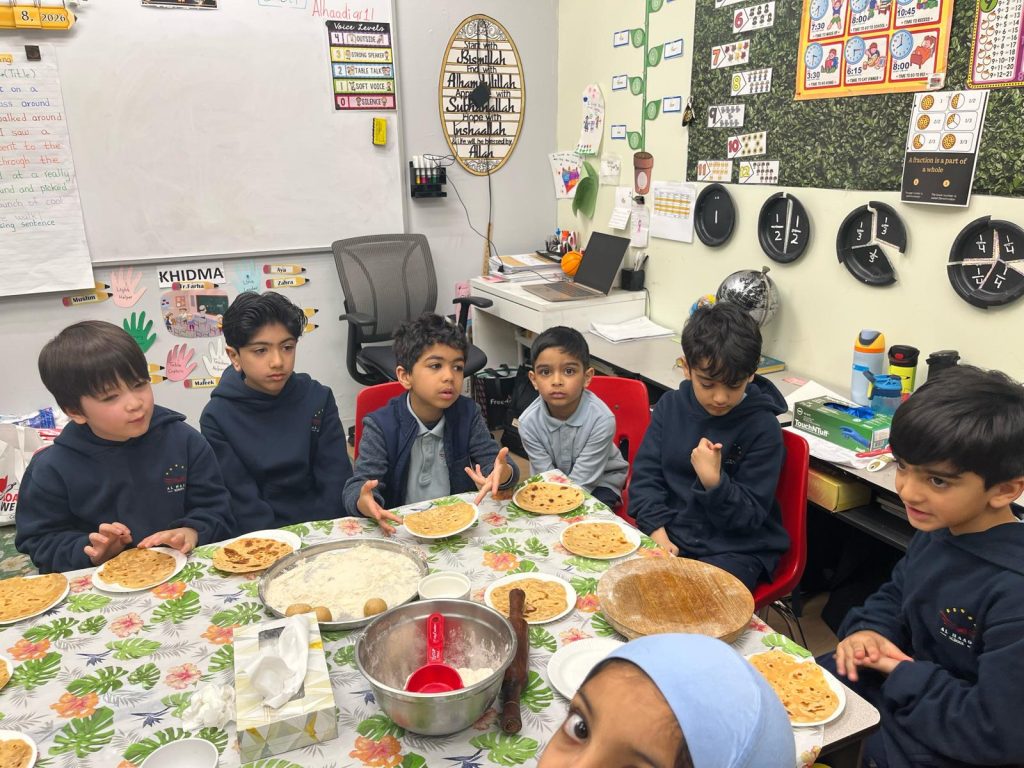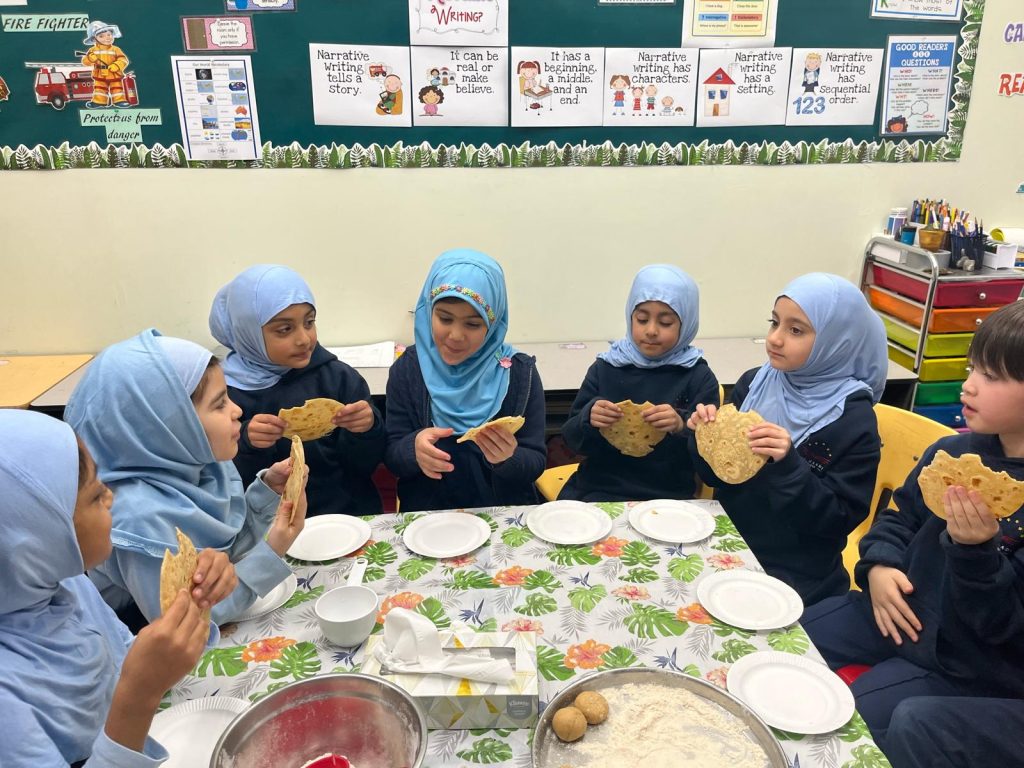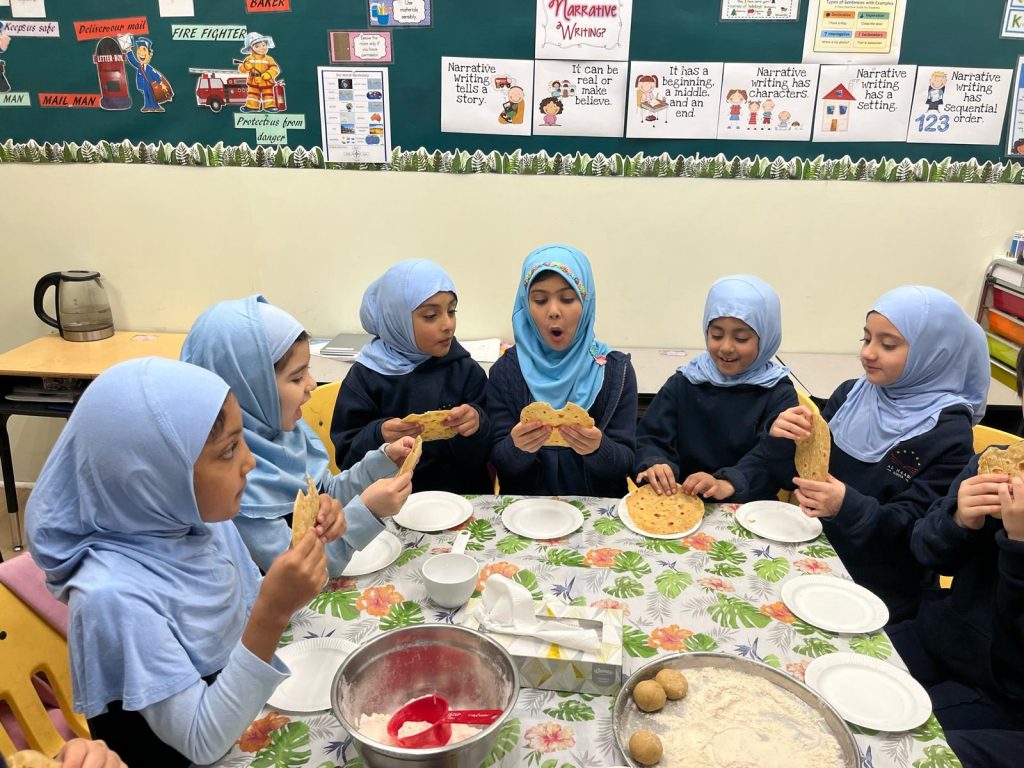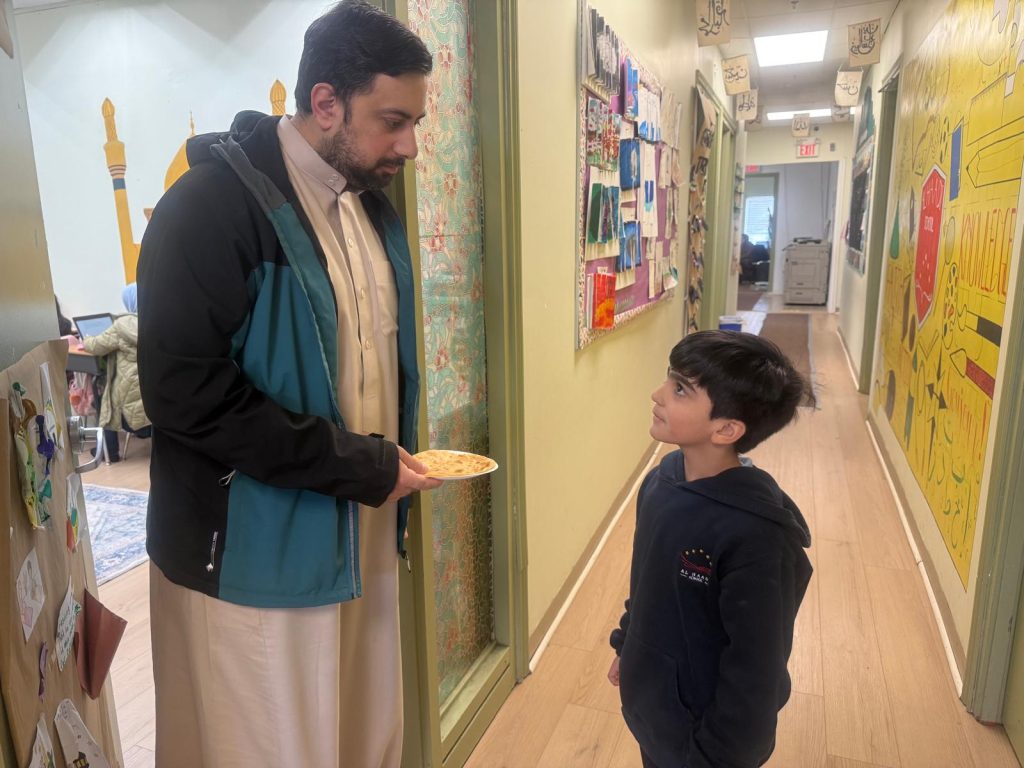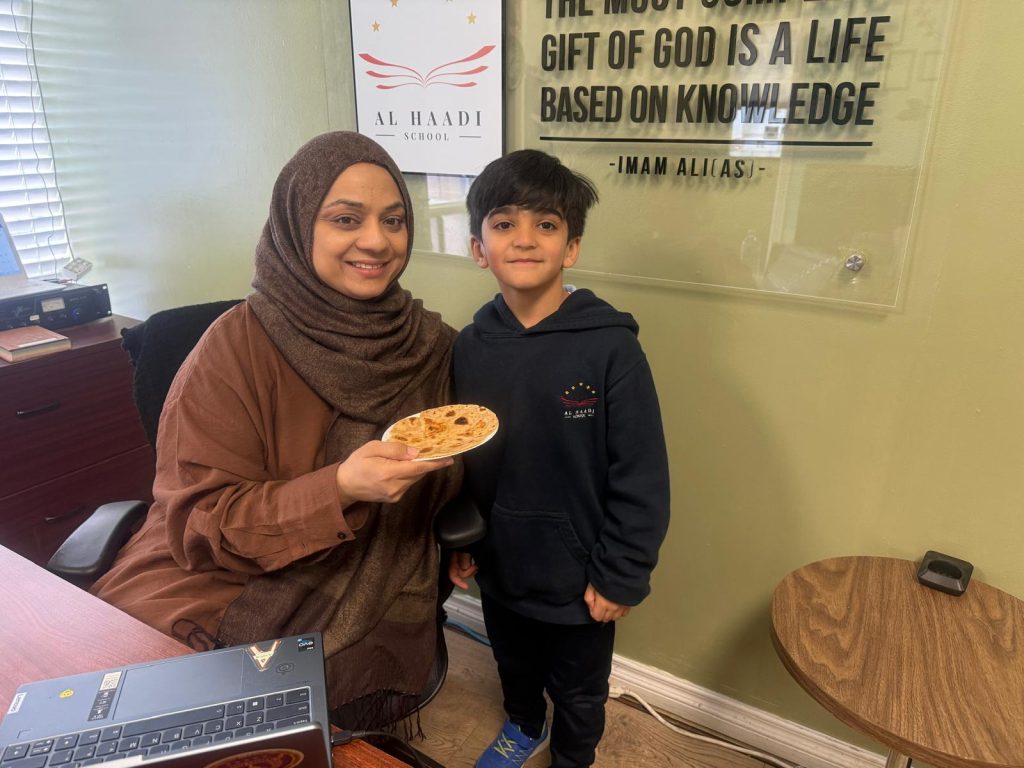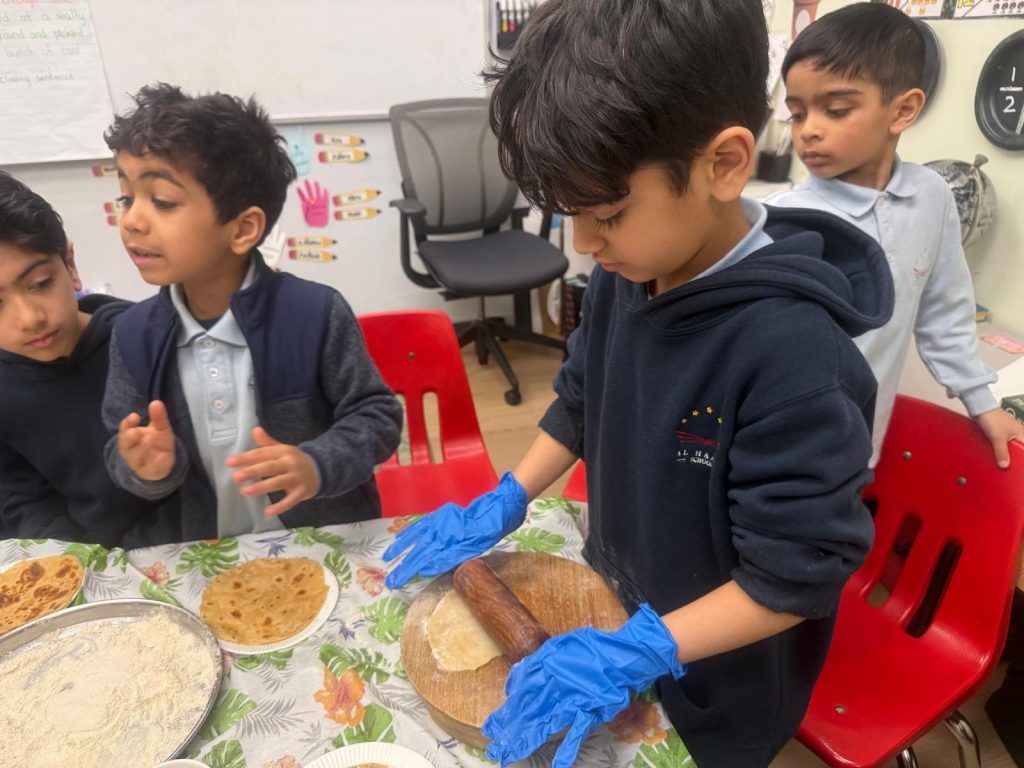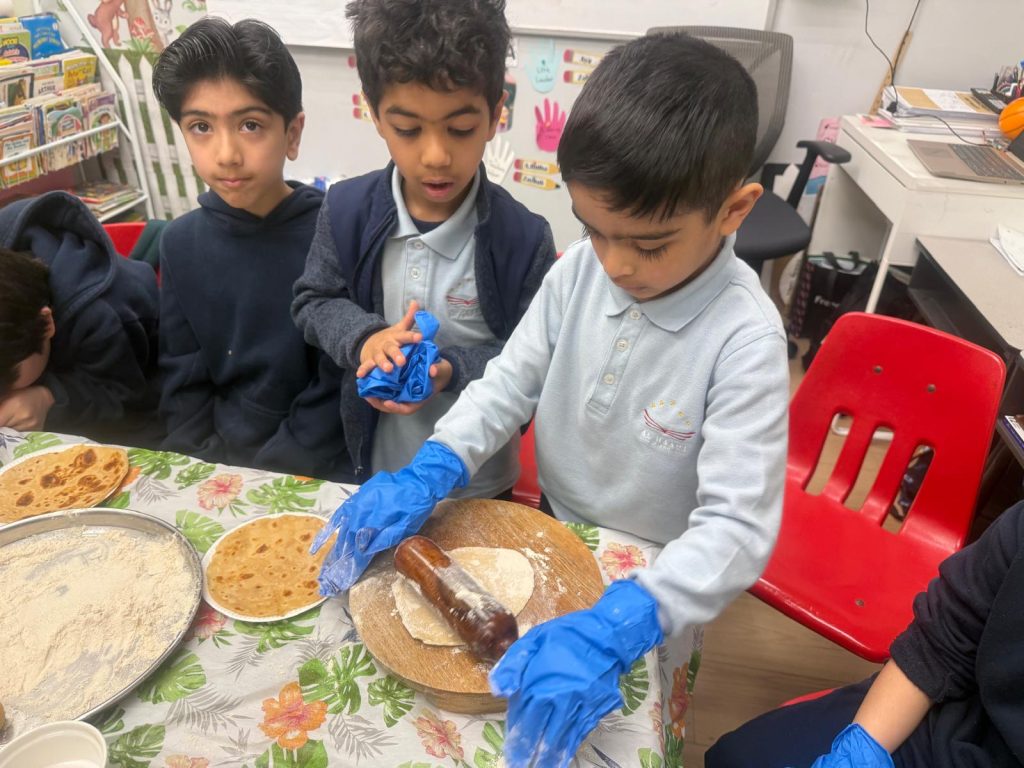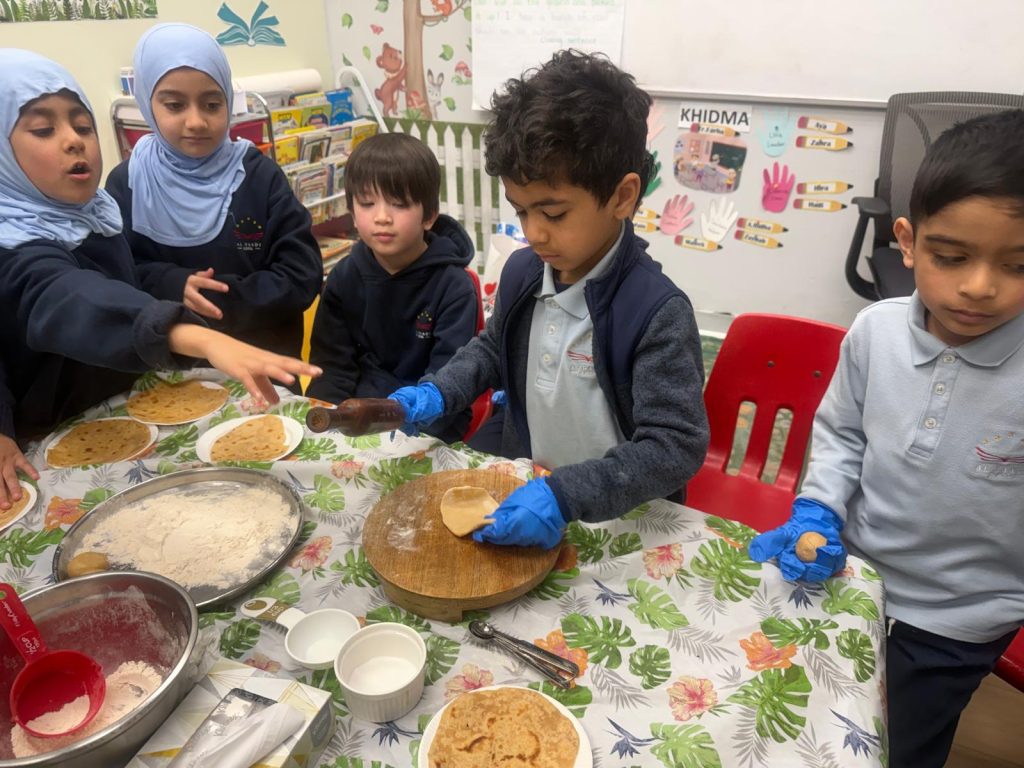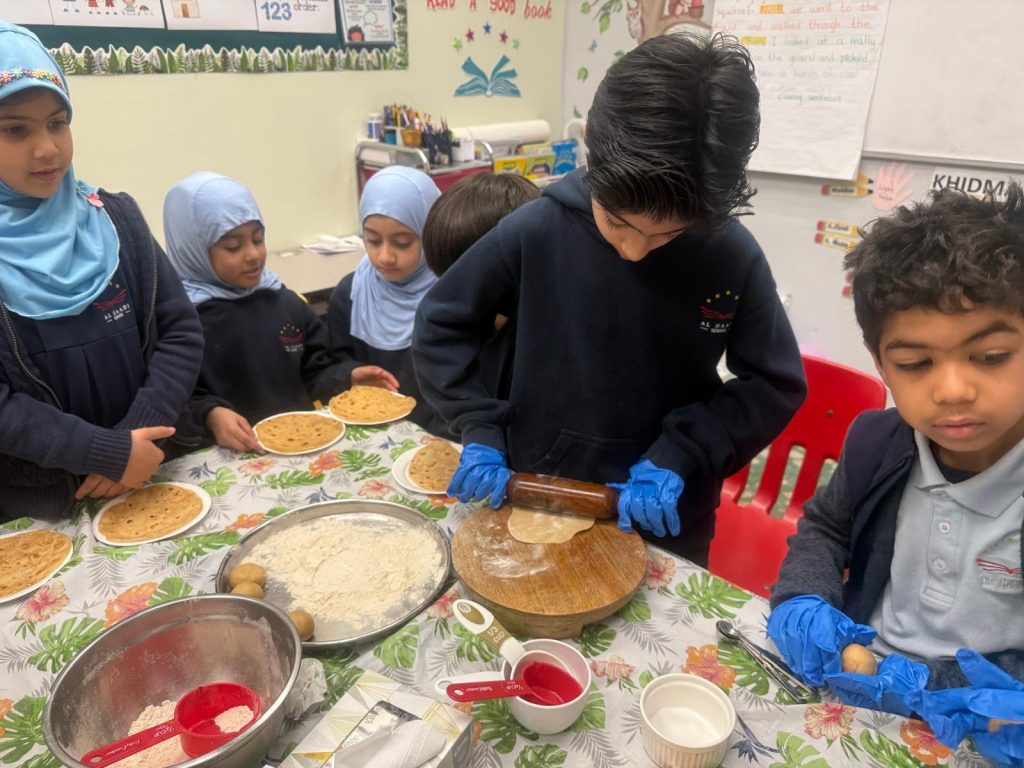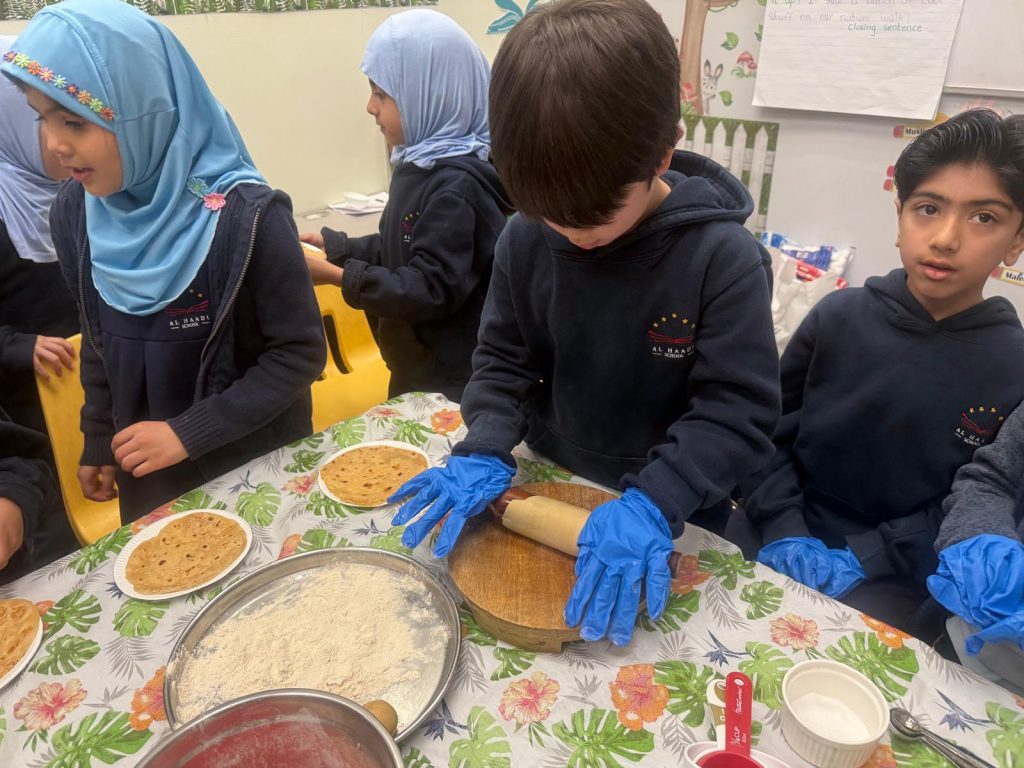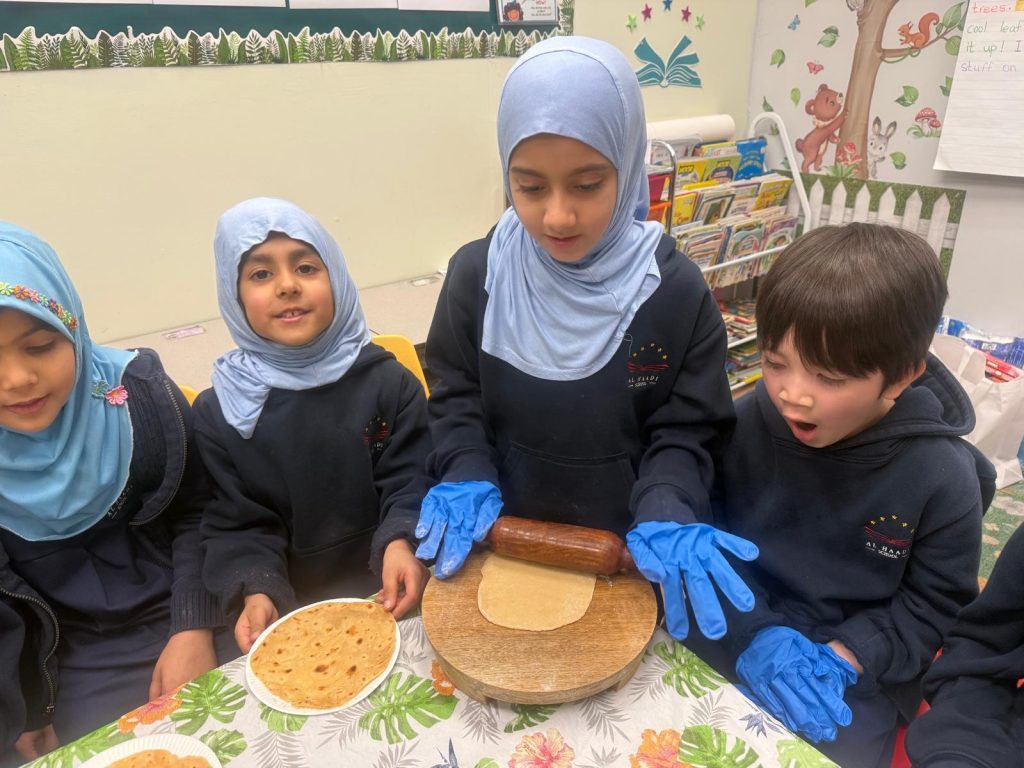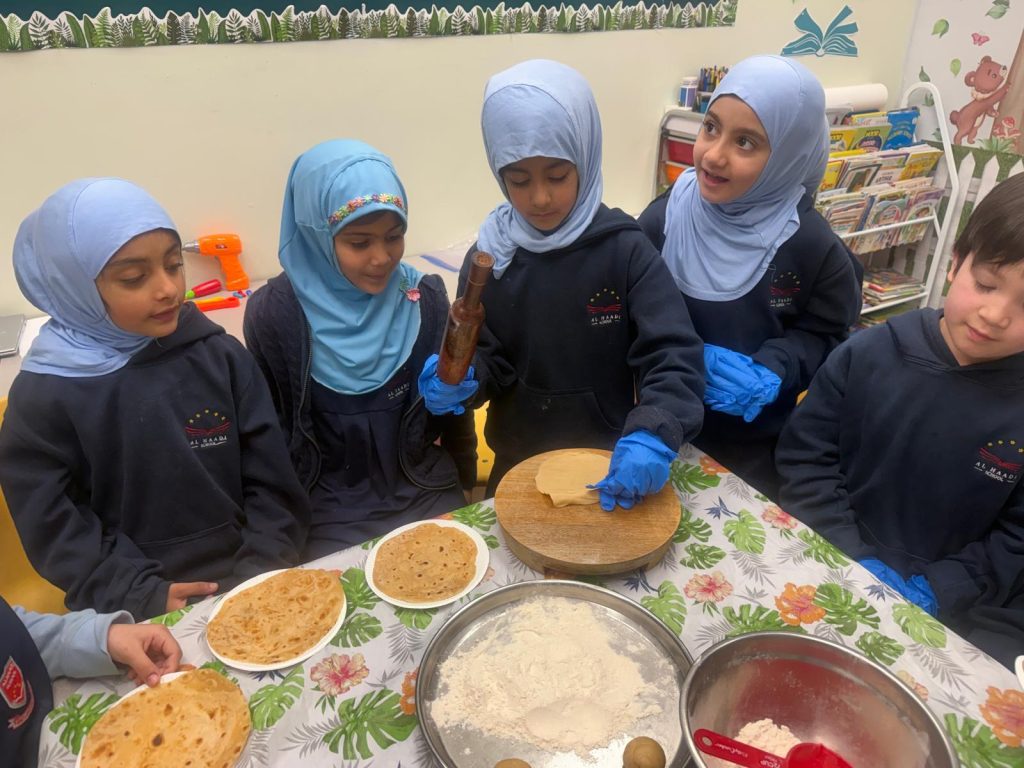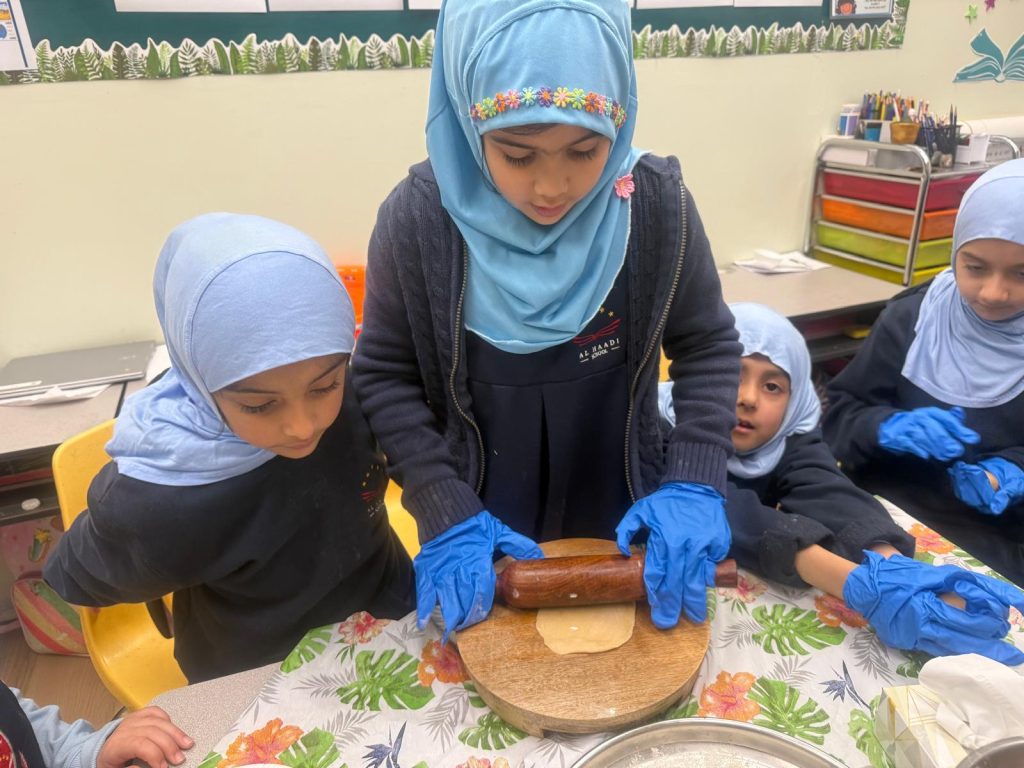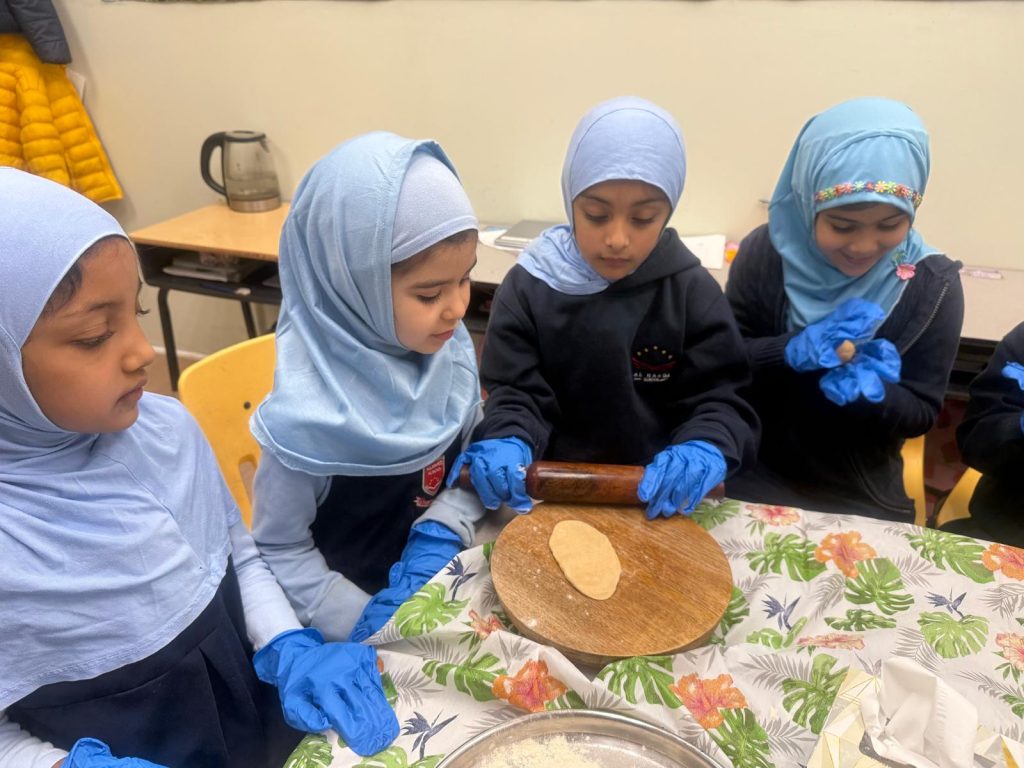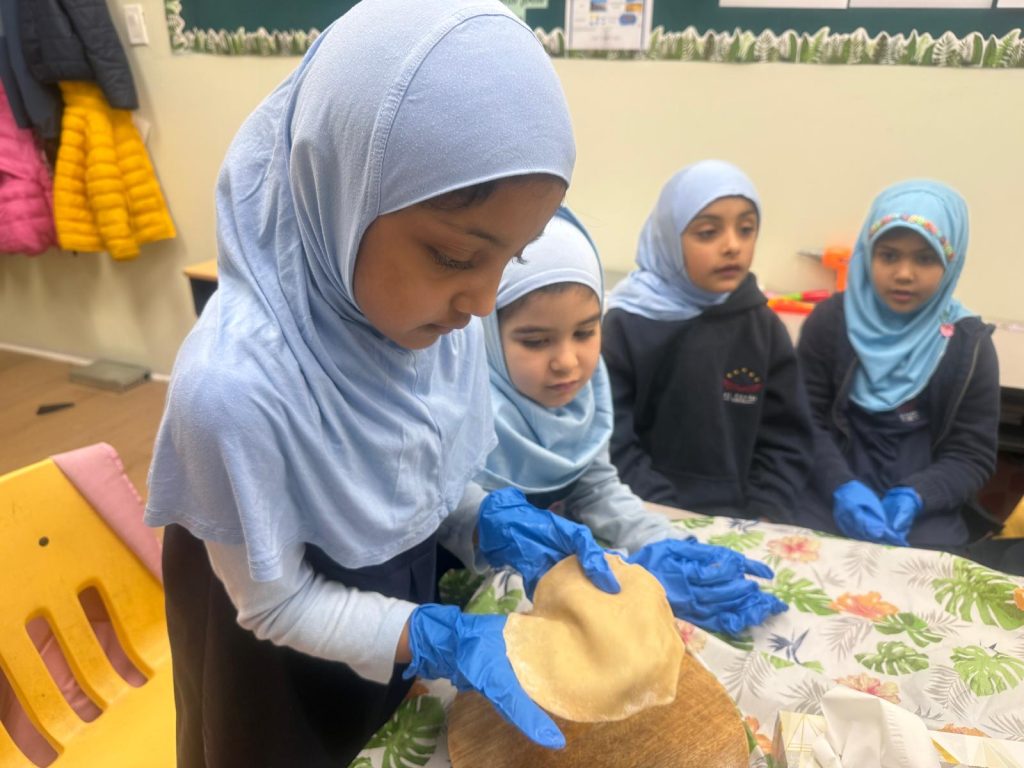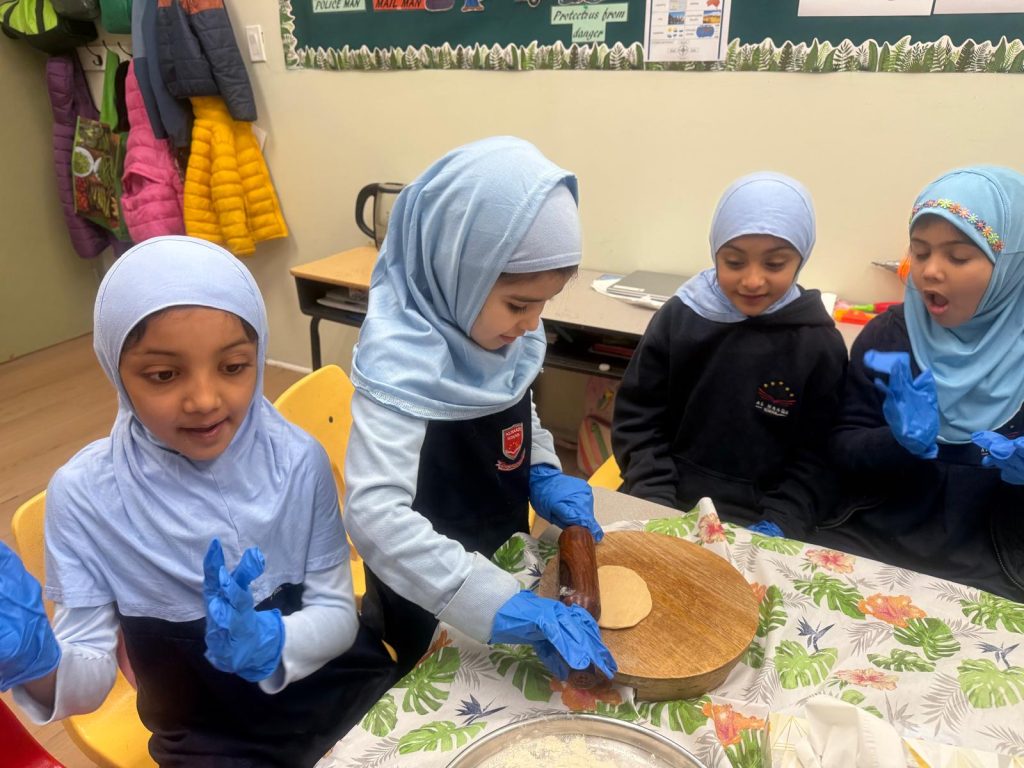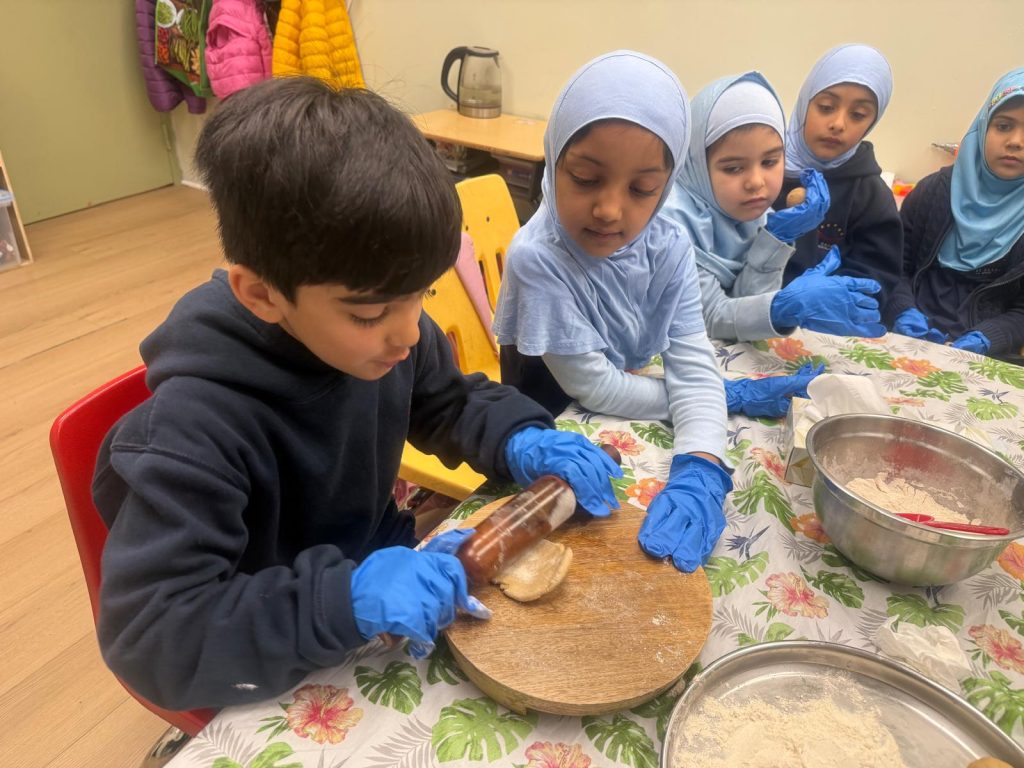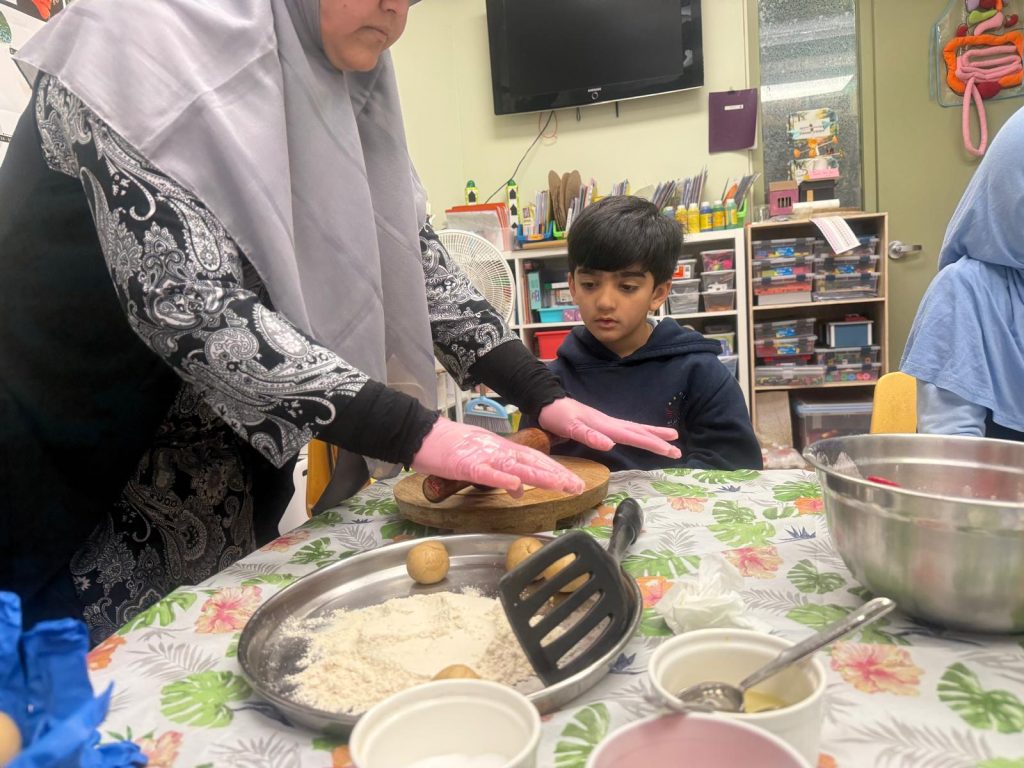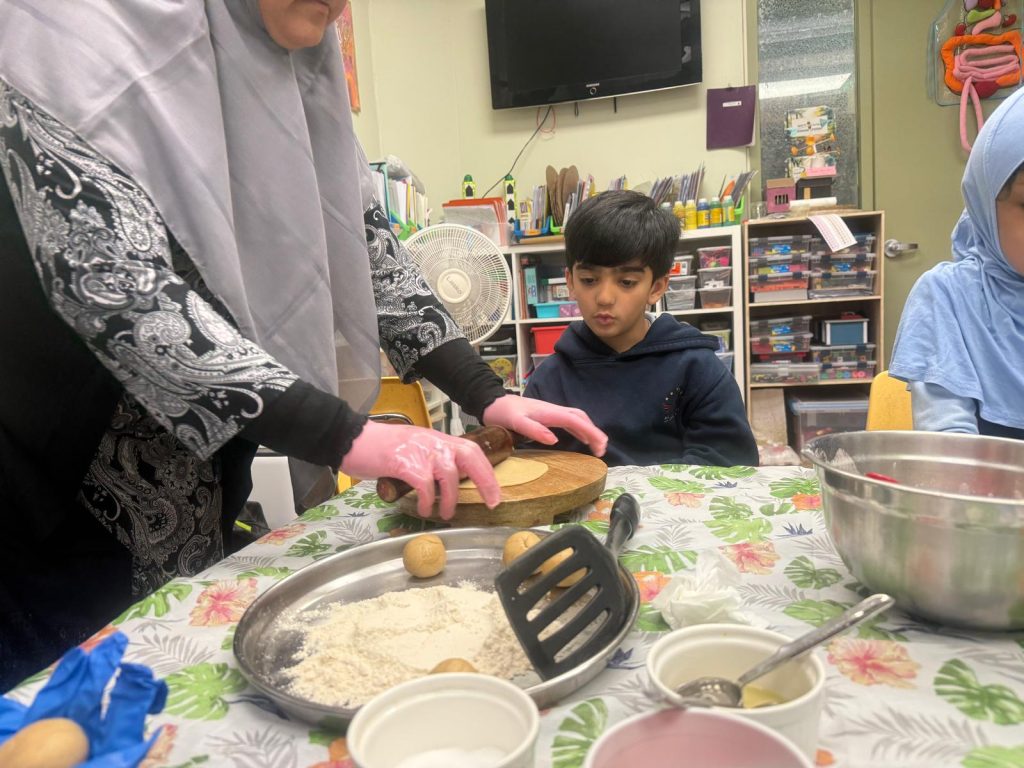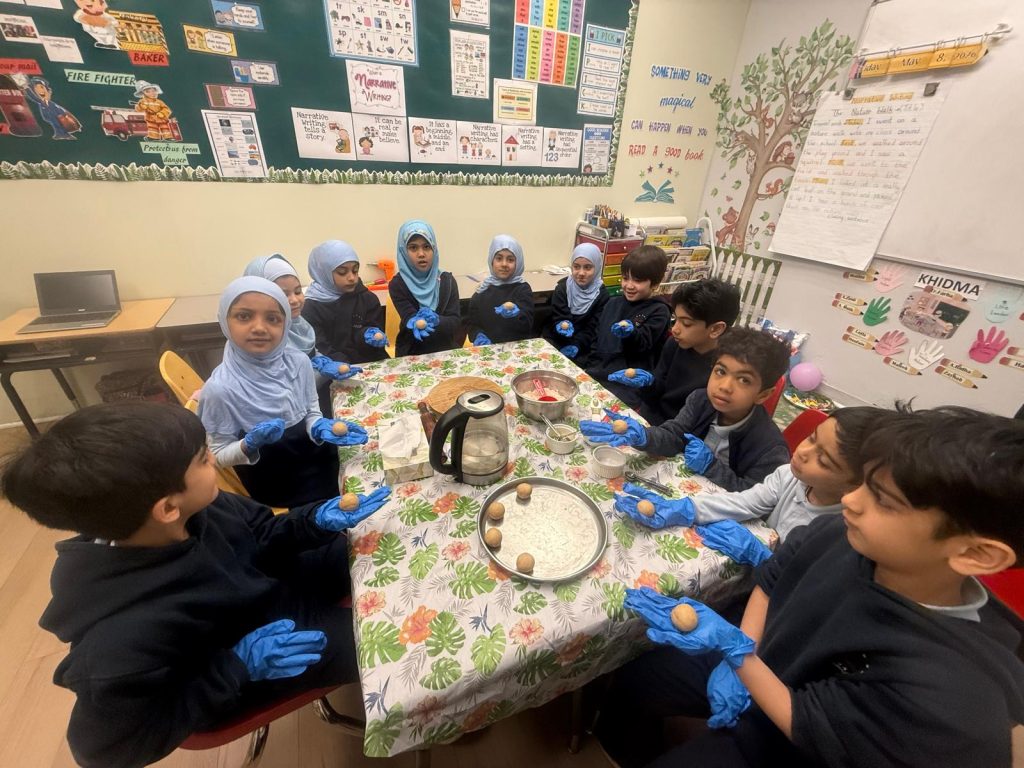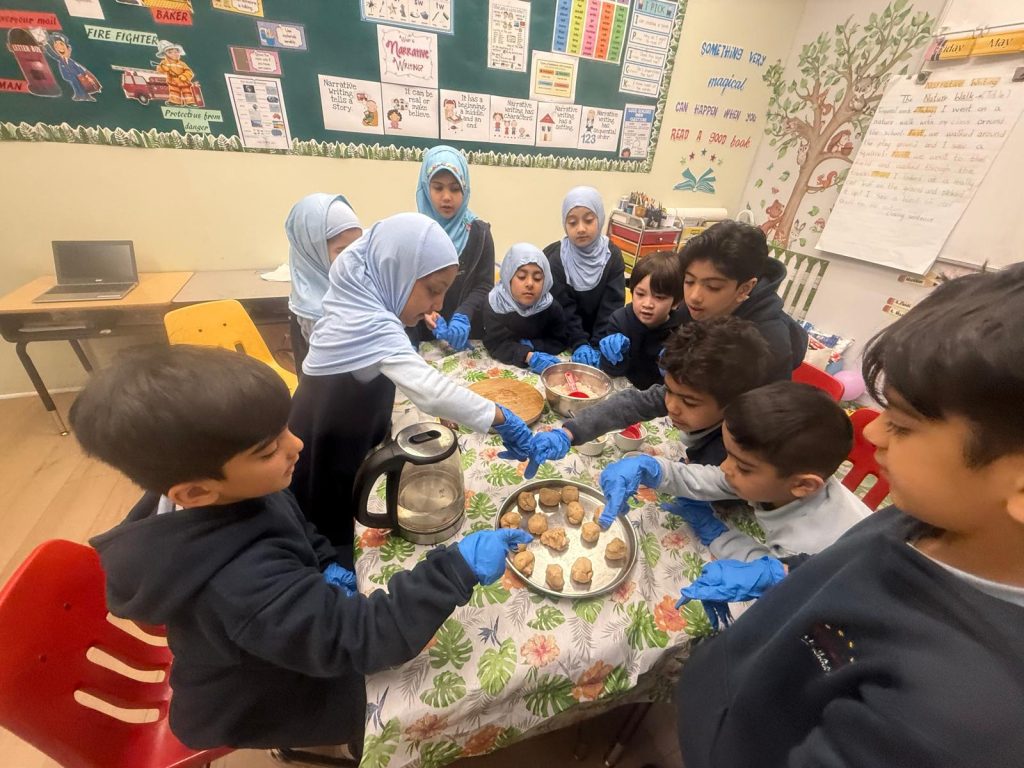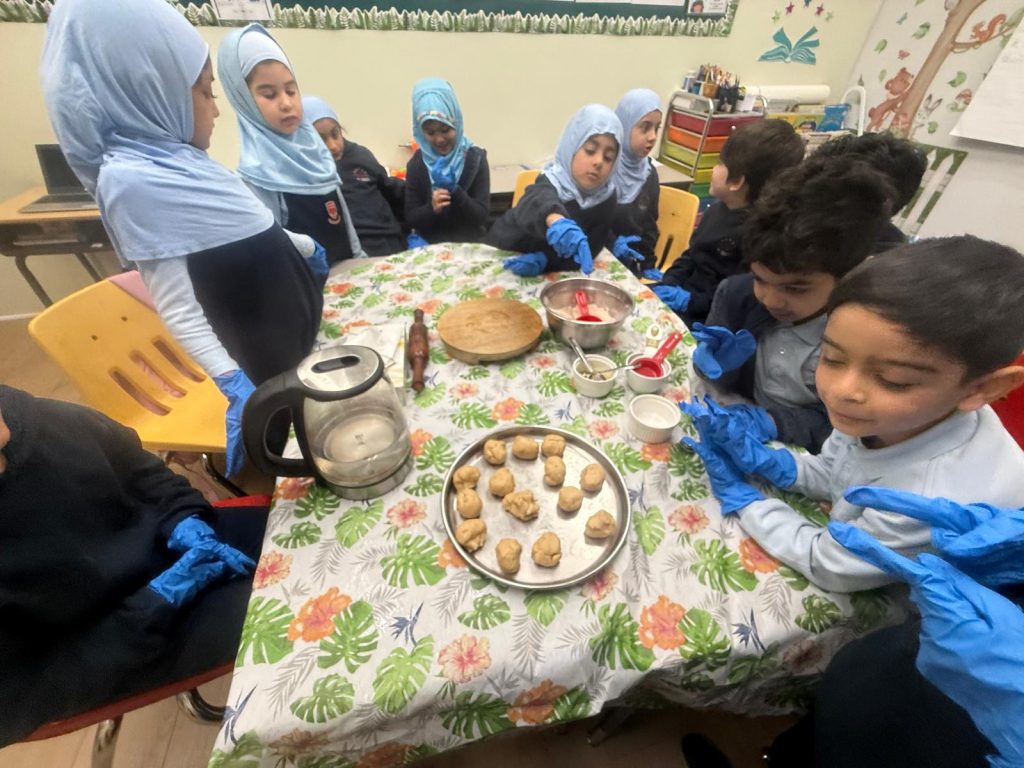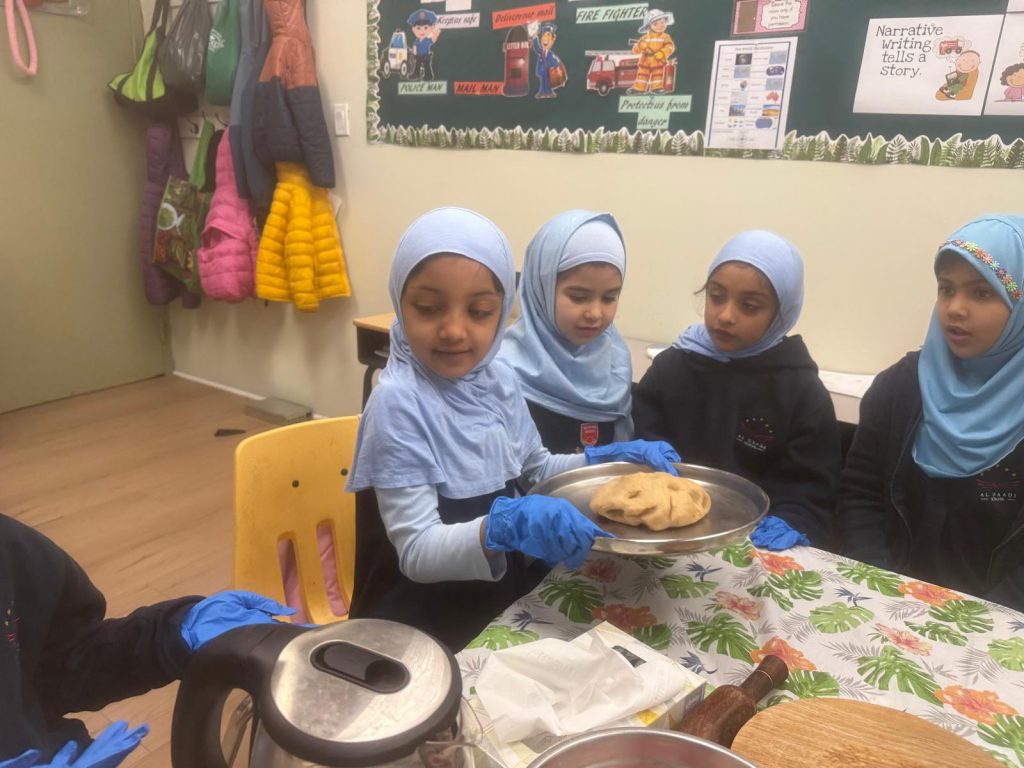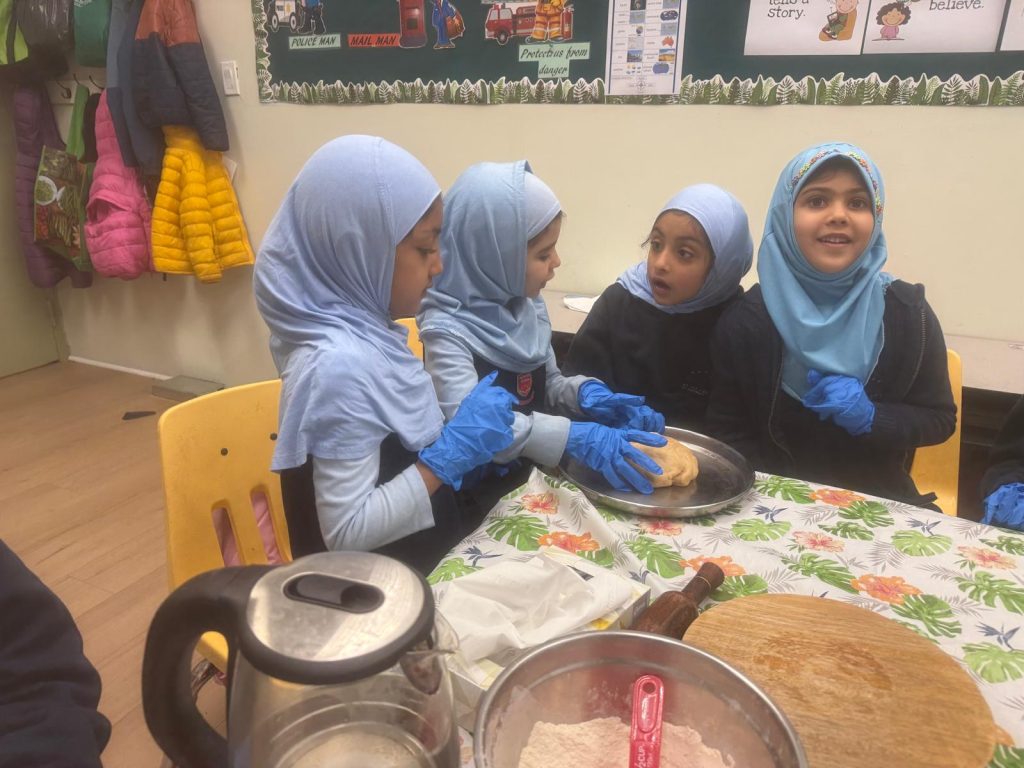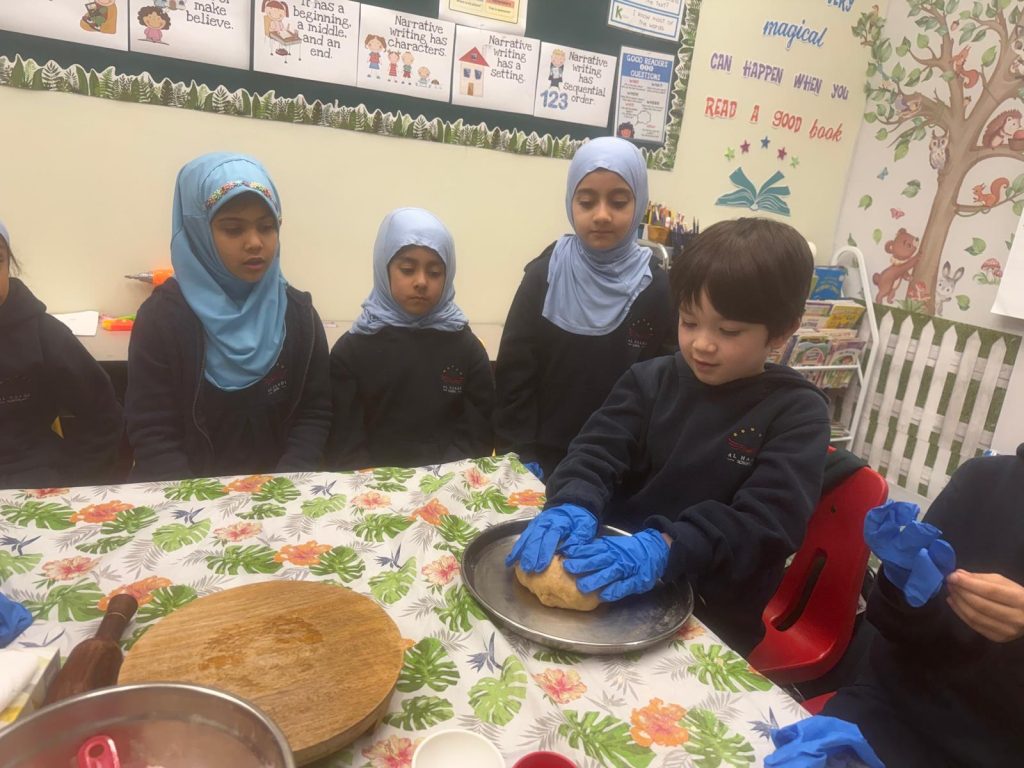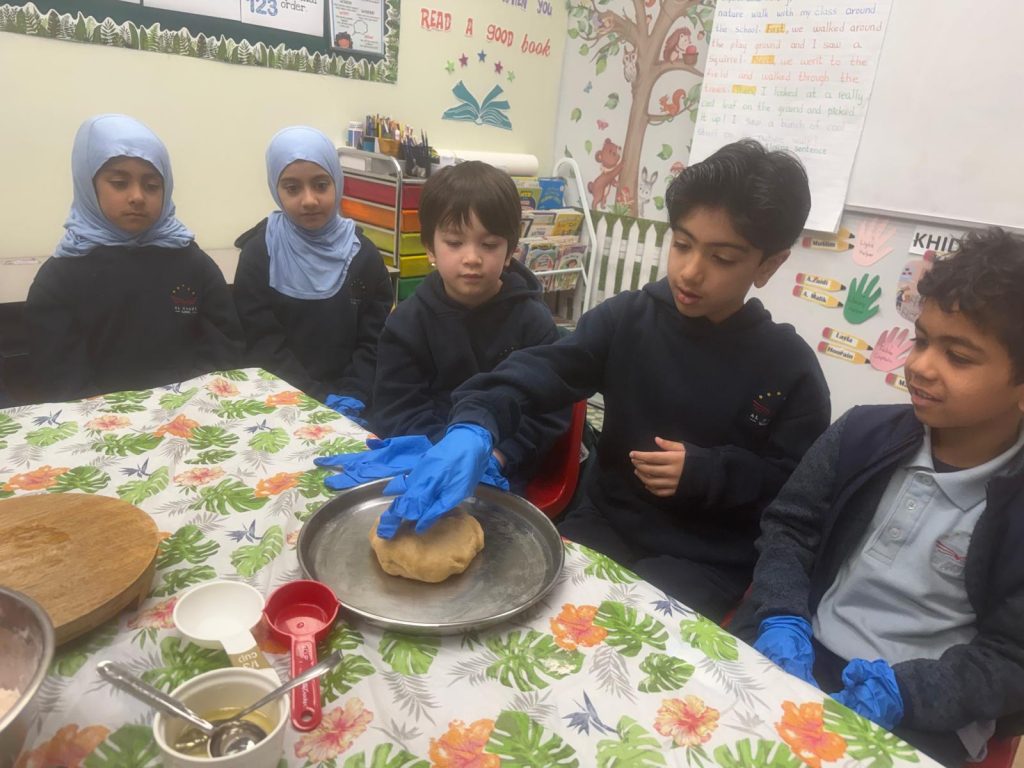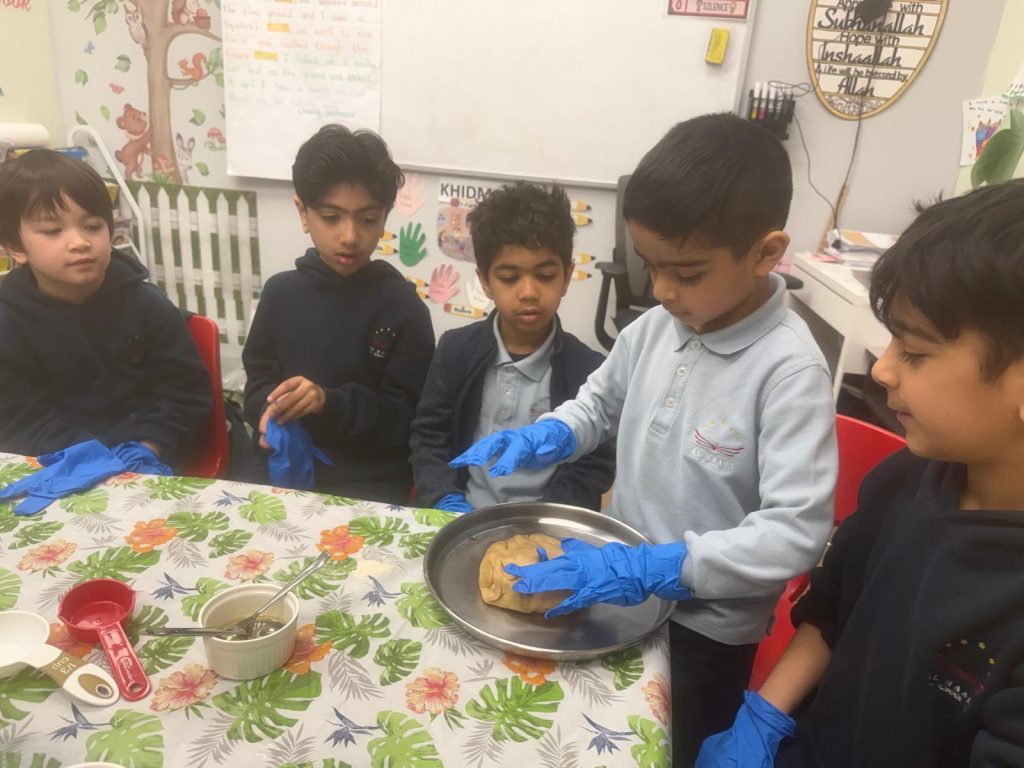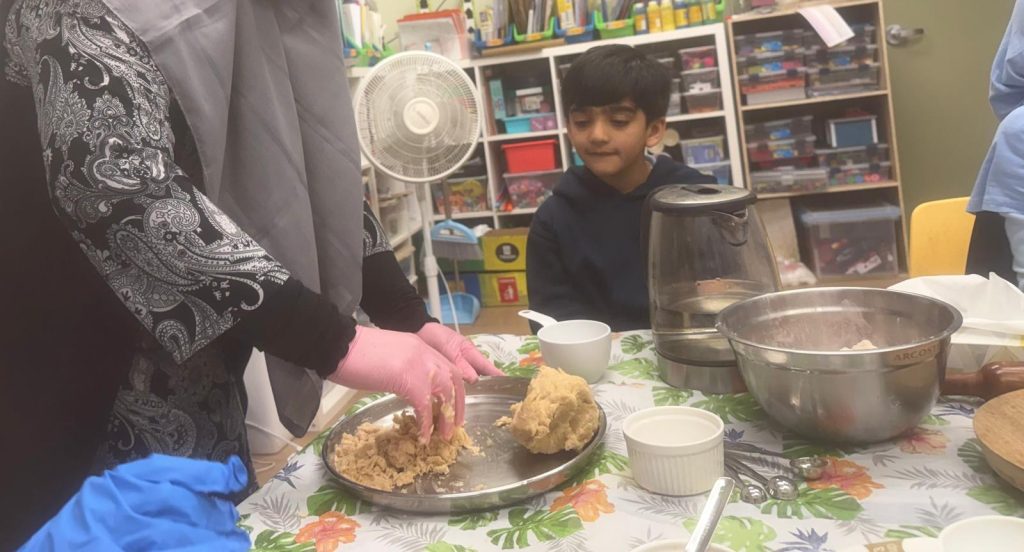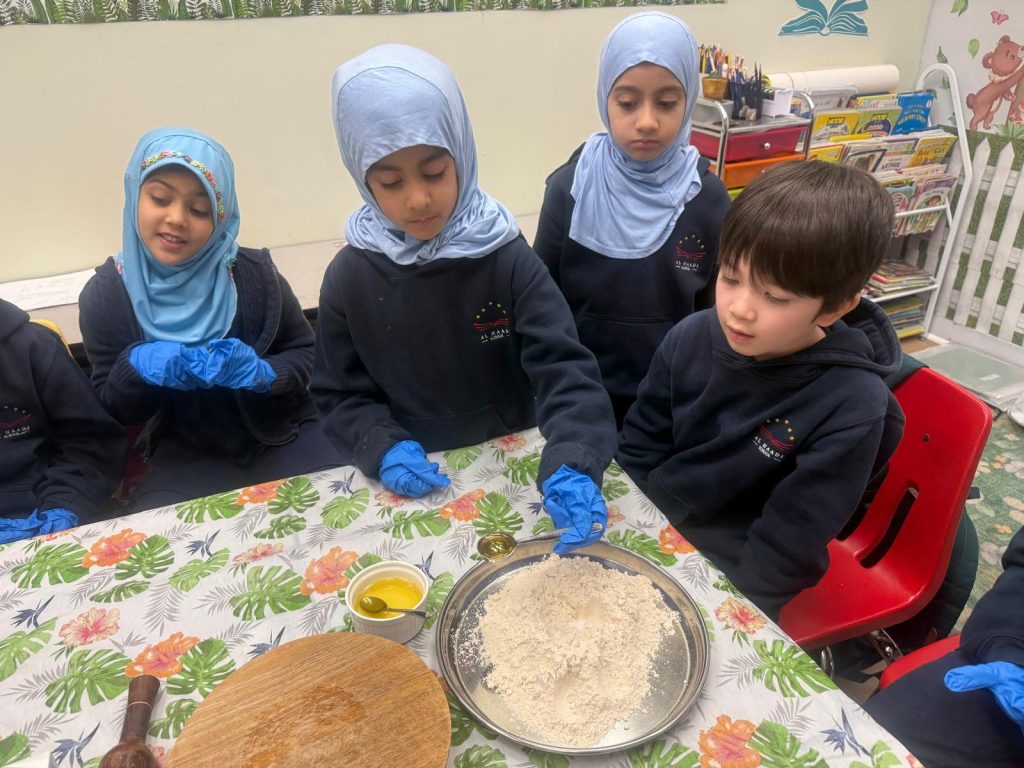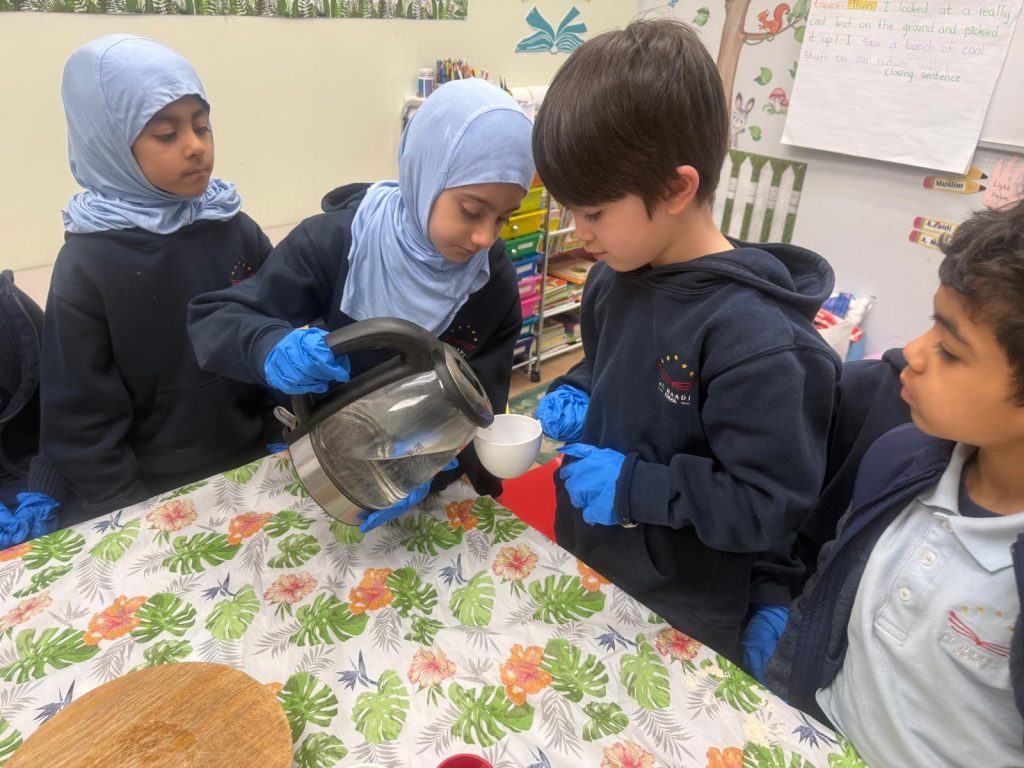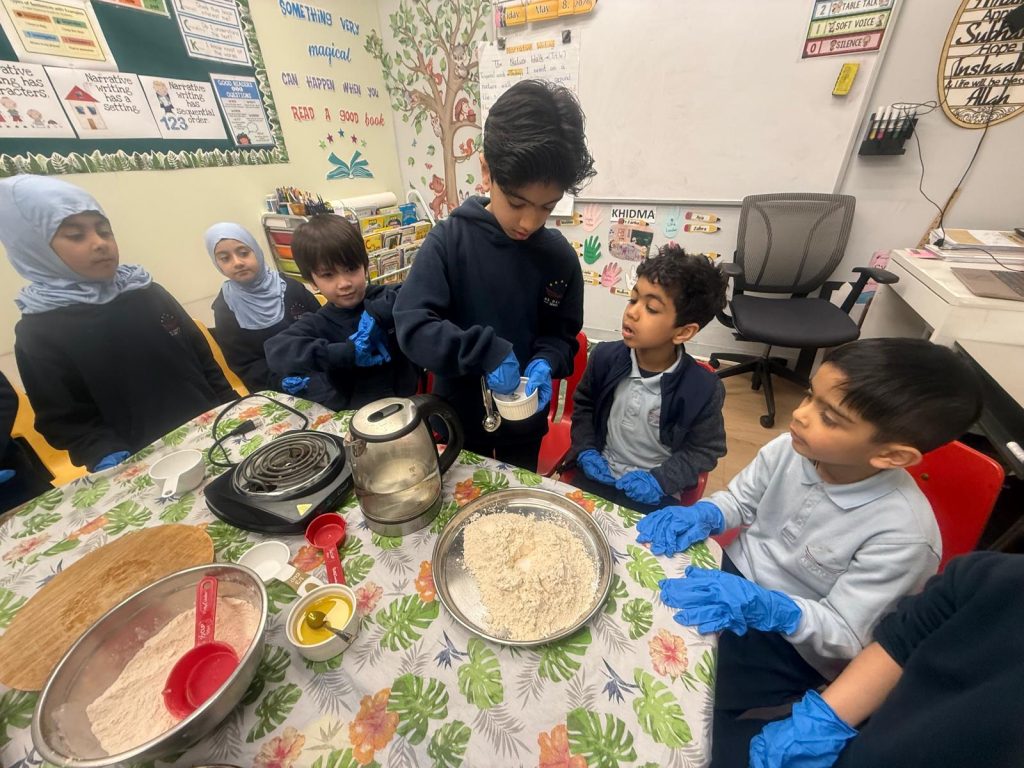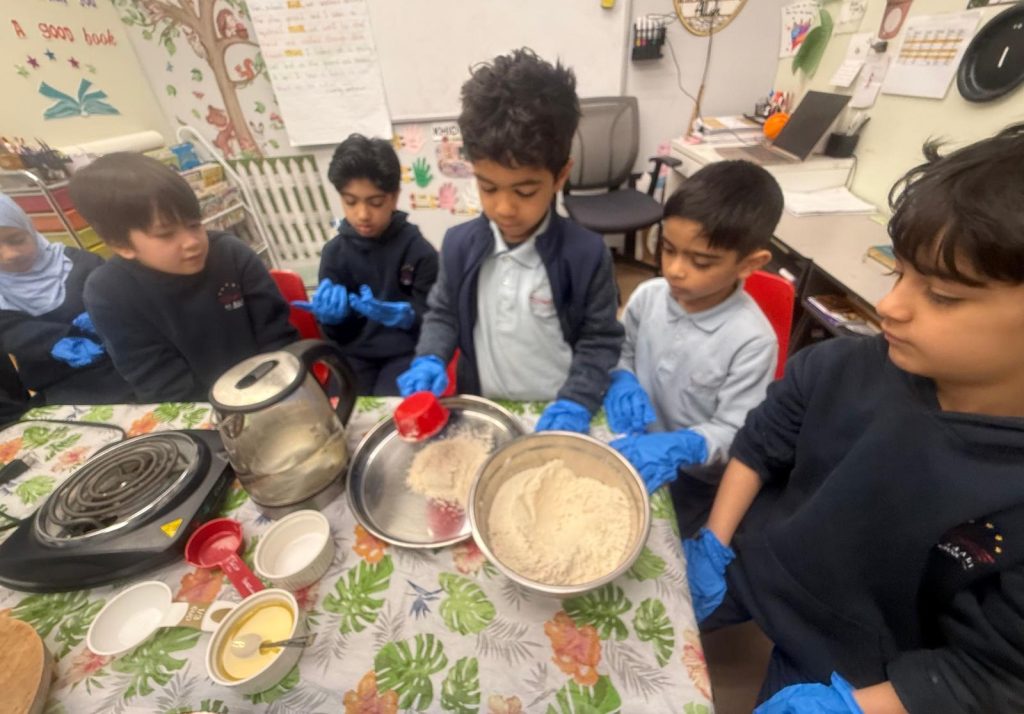
Our Grade 1 students recently enjoyed a wonderful hands-on learning experience by making their own “Roti” or “Chapati.” This engaging activity provided students with an opportunity to connect classroom concepts with real-life experiences in a meaningful and enjoyable way.
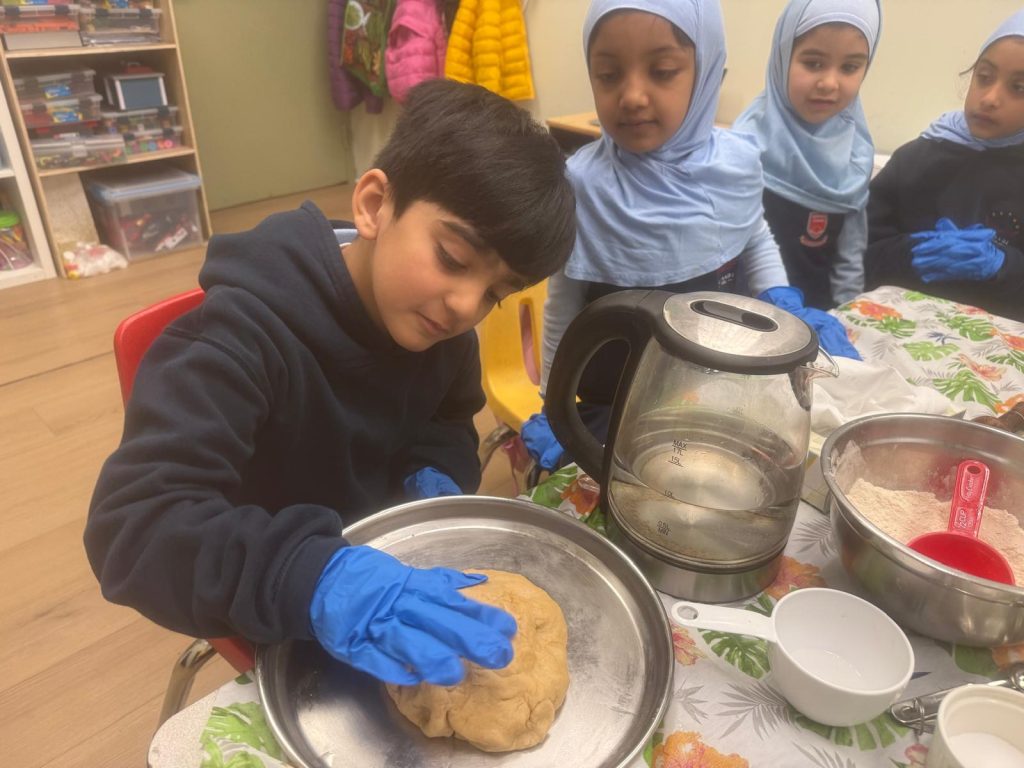
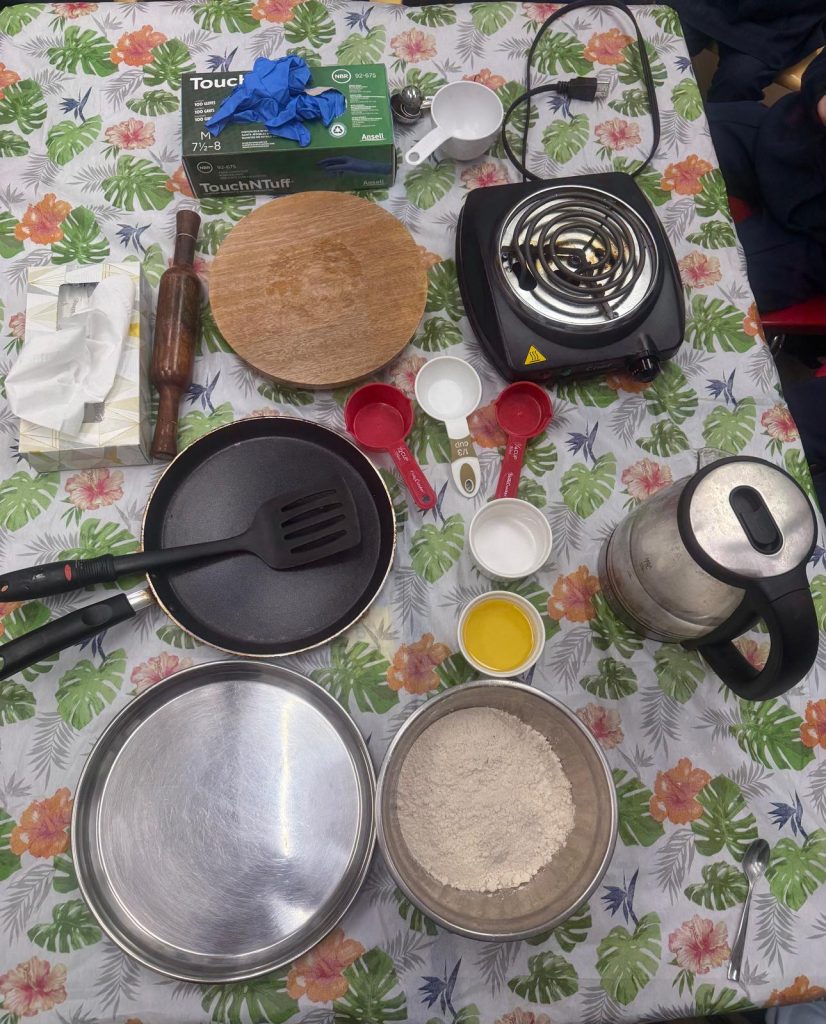
As part of their current Math learning on standard units, in which they have been learning about “capacity,” students used measuring cups, scoops, and spoons to carefully measure ingredients such as flour, water, oil, and salt. Through this process, they explored concepts related to quantity, measurement, and capacity while learning how different amounts are needed to prepare food. The children mixed the ingredients together and observed the changes in texture as the dough formed. They kneaded the dough using their hands, made small dough balls, and rolled them into circular shapes to prepare their rotis. During the activity, students connected their learning to shapes, size, sequencing, and simple fractions by discussing equal portions and circular forms.
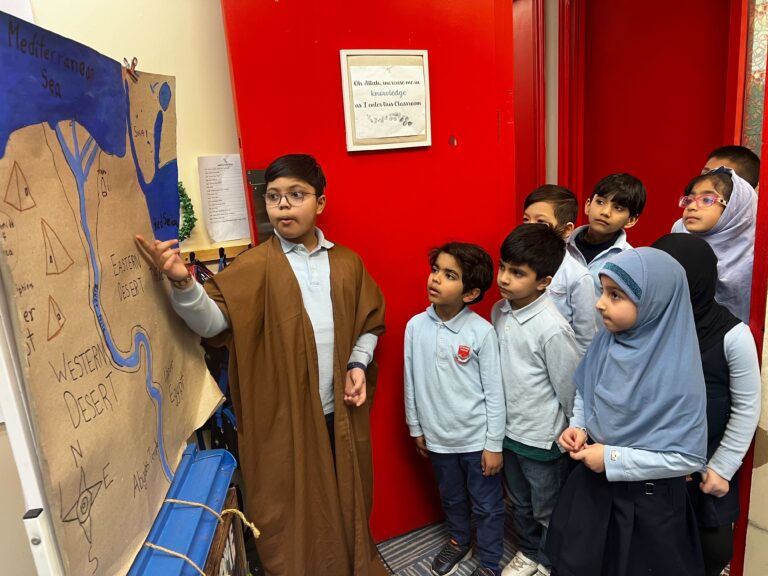
The experience also encouraged students to use their senses to observe, describe, and reflect on their learning. They explored how the ingredients looked, felt, and smelled throughout the process. In addition, students learned about countries and cultures where roti or chapati is commonly eaten as part of daily life and discussed the time and effort involved in preparing this traditional food.
To deepen their understanding, students also reflected on the blessings of food and learning through simple Qur’anic connections. They learned that Allah provides us with food and sustenance and that we should always be thankful for His blessings. “And eat of what Allah has provided for you [which is] lawful and good.” — Surah Al-Ma’idah 5:88
Students were encouraged to say “Alhamdulillah” and appreciate the effort, ingredients, and people involved in preparing food for us every day. This cross-curricular activity beautifully integrated learning across multiple subjects:
- Math – measurement, standard units, capacity, shapes, and fractions
- Language – following instructions, sequencing, and vocabulary development
- Science – observing changes in materials and textures
- Social Studies – understanding cultural foods and traditions
- Islamic Studies – gratitude for Allah’s blessings and appreciation of food
Through this enriching experience, students developed practical life skills, teamwork, fine motor skills, and a deeper appreciation for learning through exploration and discovery. It was a joyful and memorable learning experience for our young learners!