
1. Recovering a Unified Vision of Knowledge
For much of human history, education was not viewed merely as the transmission of information or the preparation of individuals for employment. Rather, it was understood as the cultivation of the human being in his or her entirety. Questions of truth, meaning, purpose, ethics, and ultimate reality were considered inseparable from the study of mathematics, science, literature, politics, and the natural world.
In the Western world, this understanding began to change significantly during the nineteenth century. Institutions such as Oxford and Cambridge had long viewed theology as the foundation upon which all other disciplines rested. Faculty members were generally required to be clergy, and the pursuit of knowledge was understood within a broader religious and metaphysical framework. However, a series of university reforms throughout the nineteenth century gradually separated theology and metaphysics from the other sciences. Knowledge became increasingly fragmented into independent disciplines, each operating according to its own methods and assumptions.
This transformation profoundly shaped the modern educational landscape. Schools increasingly focused on technical competence, measurable outcomes, and specialized knowledge, while questions concerning the nature of the human being, the purpose of life, morality, and the Divine were often relegated to the private sphere.
Muslim societies were not immune to these developments. As modern schooling systems spread throughout the Muslim world, a distinction emerged between two educational institutions that had historically been far more integrated: the modern school and the seminary (hawzah). The modern school became responsible for the sciences, mathematics, language arts, and professional preparation, while the hawzah became the custodian of theology, law, philosophy, spirituality, and religious learning. Over time, these institutions developed distinct cultures, methodologies, and educational aims.
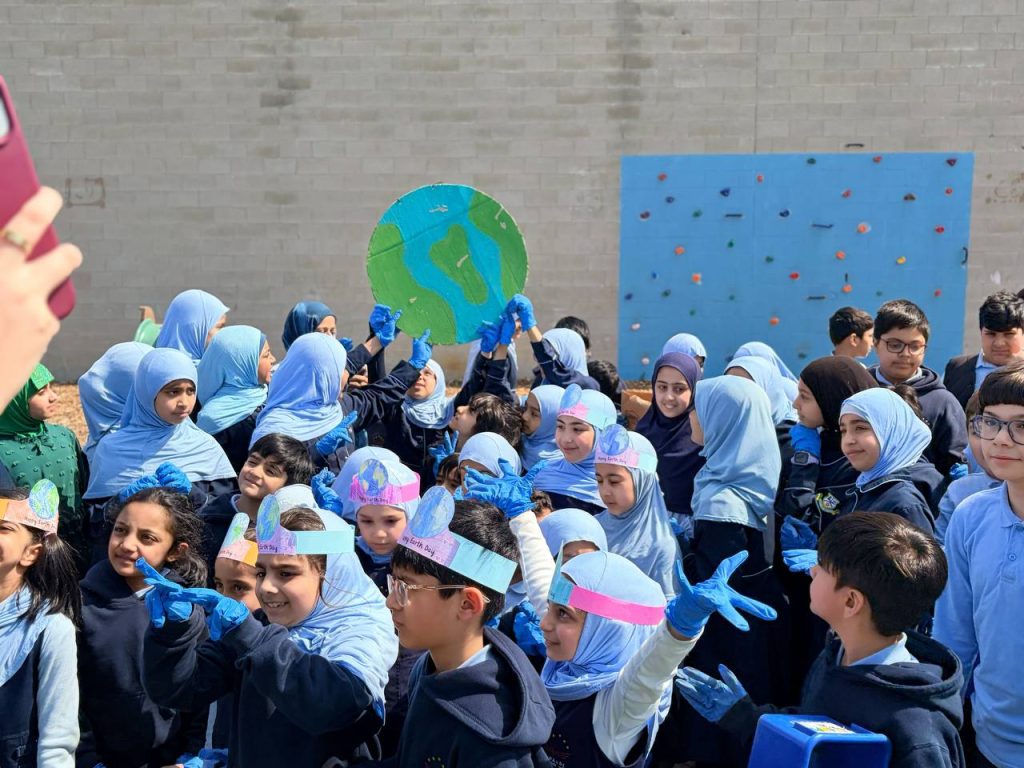 At Al Haadi School, we believe that this separation has contributed to a fragmented understanding of both knowledge and the human person. We believe that the world, the self, and revelation are not independent realities but interconnected signs pointing toward a single truth. Education should therefore cultivate a coherent worldview that allows students to understand themselves, society, nature, and knowledge itself through a meaningful relationship with Allah (swt).
Our educational vision seeks to bridge this divide by reconnecting faith, knowledge, character, and action within a unified framework rooted in the Islamic intellectual tradition.
2. Allah: The Ultimate Guide
The name “Al Haadi” means “The Guide.” Allah (swt) is the ultimate source of all guidance, knowledge, wisdom, and growth. Every form of genuine learning ultimately traces back to Him, whether it is discovered through revelation, reason, reflection, or observation of the natural world.
Out of His mercy, Allah (swt) entrusted humanity with guidance through His prophets and messengers, culminating in the mission of Prophet Muhammad (p). The Prophet (p) was not merely a recipient of revelation; he was the greatest educator humanity has known. Through his teaching, example, character, and leadership, he transformed individuals, families, and entire civilizations.
His successors, Imam Ali (a) and the Ahl al-Bayt (a), continued this educational mission. They nurtured generations of scholars, thinkers, worshippers, leaders, and reformers who understood that knowledge was not an end in itself but a means of drawing closer to Allah and serving humanity.
The central lesson inherited from the Prophet (p) and his family (a) is the principle of God-centricity. It is through God-centricity that all goodness emerges, as the Holy Prophet (p) has said:
“O People, there is only Allah and Satan, there is Truth and falsehood, there is guidance and misguidance, there is growth or decline, there is progression or regression, there are good deeds and bad deeds – so whatever falls under good is from Allah and whatever falls under bad is from Satan.”
Human flourishing emerges when all dimensions of life are oriented toward Allah. Knowledge, ethics, relationships, leadership, creativity, and service derive their meaning and purpose through this relationship.
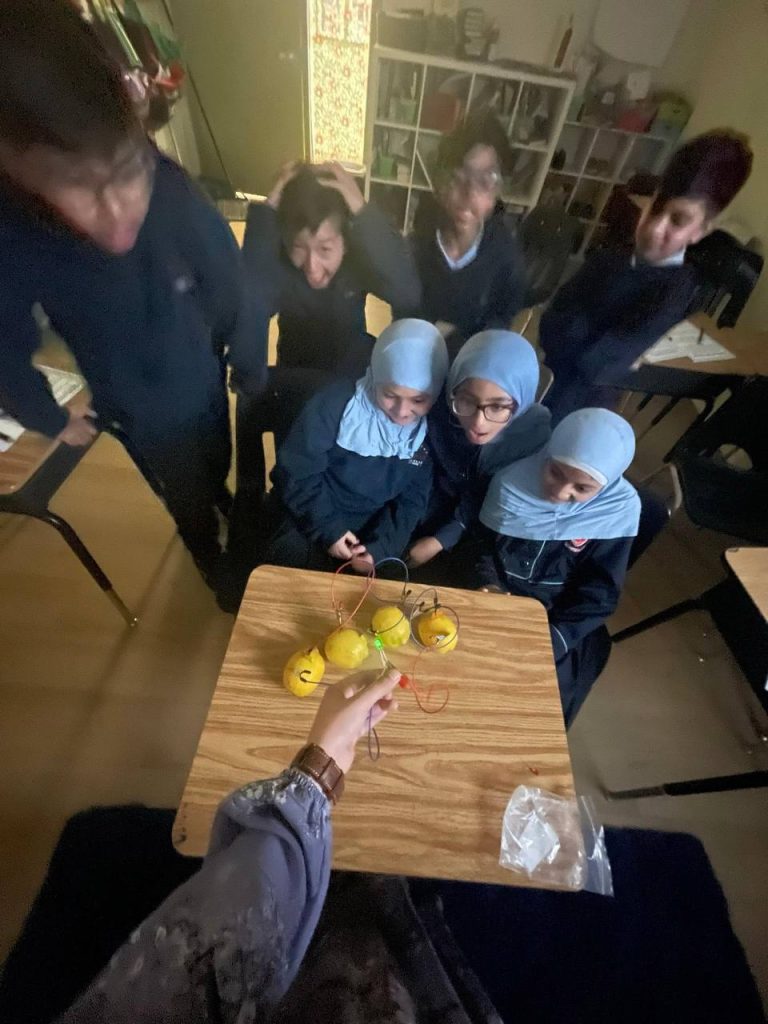 It was this God-centric worldview that inspired one of history’s greatest civilizations. Muslim scholars, physicians, philosophers, jurists, poets, and educators did not view their disciplines as isolated pursuits. Rather, they saw all branches of knowledge as pathways toward understanding the signs of Allah in creation.
At Al Haadi School, we strive to revive this integrated vision of learning and human development.
3. Education as Transformation
We believe that education is fundamentally transformational rather than merely transmissive.
A successful educational experience is not measured solely by grades, test scores, or academic achievement. While intellectual excellence is important, education must also shape one’s character, worldview, habits, aspirations, and relationship with Allah.
For this reason, we place particular emphasis on the concept of tarbiyah – the nurturing and cultivation of the human being. True tarbiyah cannot occur through curriculum documents alone. It requires living examples. The most important factor in a student’s development is often not the textbook, lesson plan, or assessment, but the teacher who embodies the values being taught.
The Prophet Muhammad (p) transformed his companions not primarily through lectures, but through companionship, mentorship, example, and character. Likewise, Imam Ali (a) and the Ahl al-Bayt (a) nurtured their followers through a process of intellectual, spiritual, and moral cultivation.
At Al Haadi School, we view teachers as facilitators of transformation. Their role extends beyond delivering content. They are mentors, role models, guides, and cultivators of character. Consequently, our investment in Islamic pedagogy and teacher formation is as important as our investment in curriculum design.
4. The Teacher as a Lifelong Learner
 A core principle of our philosophy is that one cannot guide others toward growth without being committed to growth oneself. The teacher is not someone who has completed their educational journey. Rather, the teacher is someone actively engaged in a lifelong pursuit of self-development, self-purification, learning, and reflection.
For this reason, a qualified teacher at Al Haadi School is not defined merely by possession of a university degree or teaching certification. While professional qualifications remain important, we believe educators should also possess a meaningful understanding of the intellectual foundations of the Islamic tradition.
This includes familiarity with Islamic theology, foundational metaphysical principles, logic, ethics, Islamic law, spirituality, and the broader Islamic intellectual heritage. Such knowledge enables educators to approach their subjects through an integrated worldview and helps them guide students toward deeper questions of meaning, purpose, and responsibility.
Our teachers, therefore, participate in ongoing professional development that includes not only educational theory and instructional practice, but also engagement with Islamic pedagogy and the intellectual tradition that underpins it.
For a more detailed discussion of this approach, please visit our Teaching at Al Haadi page.
5. The Six Dimensions of Holistic Development
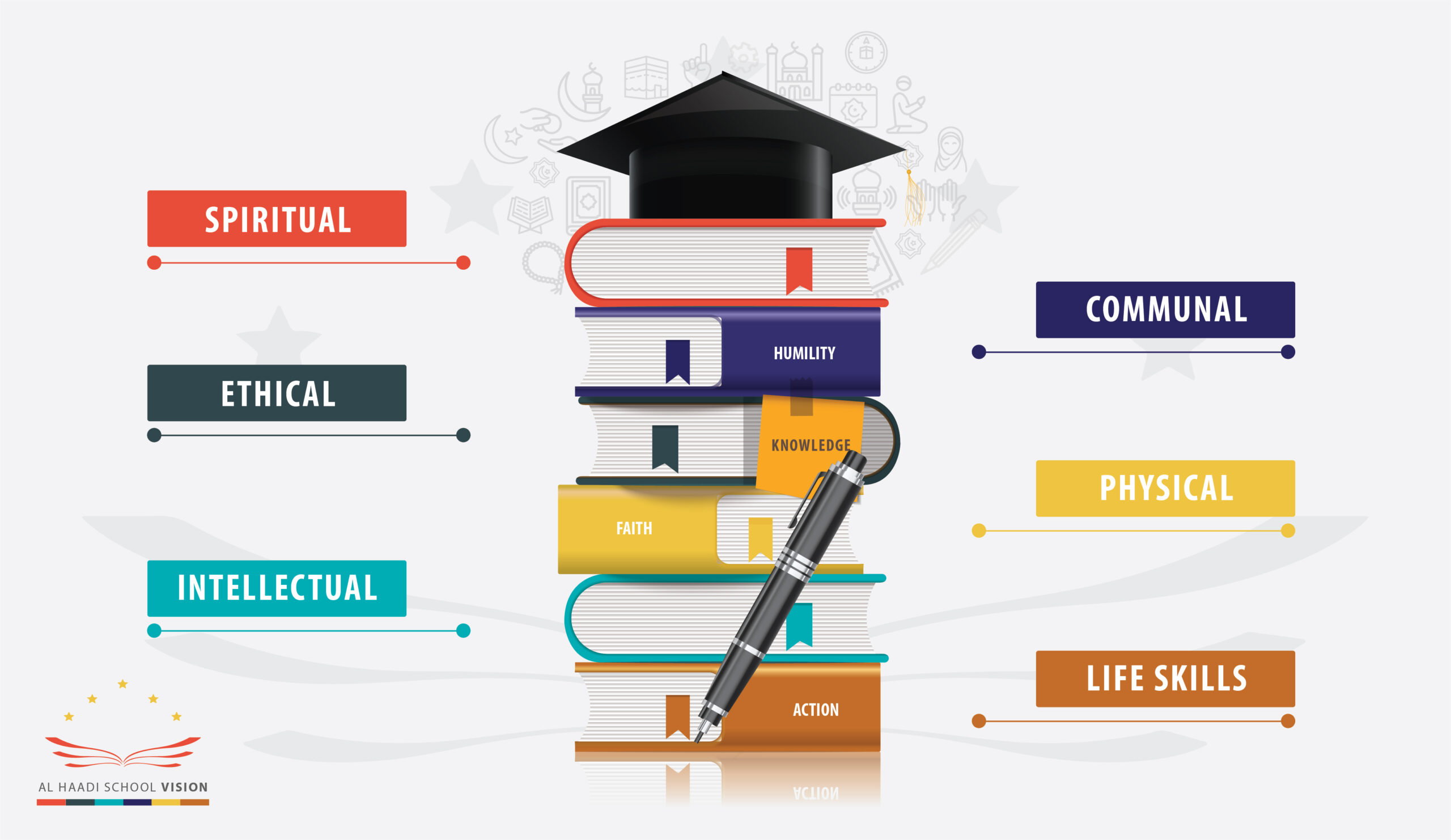
The ultimate aim of education is the balanced development of the whole person. To achieve this, Al Haadi School intentionally cultivates six interconnected dimensions of growth: Spiritual, Ethical, Intellectual, Communal, Physical, and Life Skills.
These six dimensions ensure that knowledge is not confined to academic achievement alone. Rather, knowledge becomes a means of developing spiritually grounded, ethically responsible, intellectually capable, and socially engaged individuals.
Through these six dimensions, we aim to achieve one of the central aims of education, which is the formation of a strong and confident Muslim identity. Such an identity is not built merely through memorizing religious information or performing isolated rituals. Rather, it emerges when beliefs, values, actions, habits, relationships, and aspirations are aligned with a coherent Islamic worldview.
Over many years, our school has undertaken extensive study of the Qur’an, hadith literature, and the Islamic intellectual tradition to identify key markers of Muslim identity. These insights inform our teacher training, curriculum development, school culture, and educational programming.
Our goal is to help students understand not only what Muslims believe, but why they believe it, how those beliefs shape their understanding of reality, and how they can live those beliefs with confidence, wisdom, and purpose in contemporary society.
6. Humility, Knowledge, Faith, Action
The motto of Al Haadi School is simple: Humility. Knowledge. Faith. Action.
Humility reminds us that all knowledge ultimately belongs to Allah. Knowledge equips us to understand ourselves, our world, and our responsibilities. Faith provides the orientation and purpose that directs knowledge toward what is true and beneficial. Action transforms belief into lived reality.
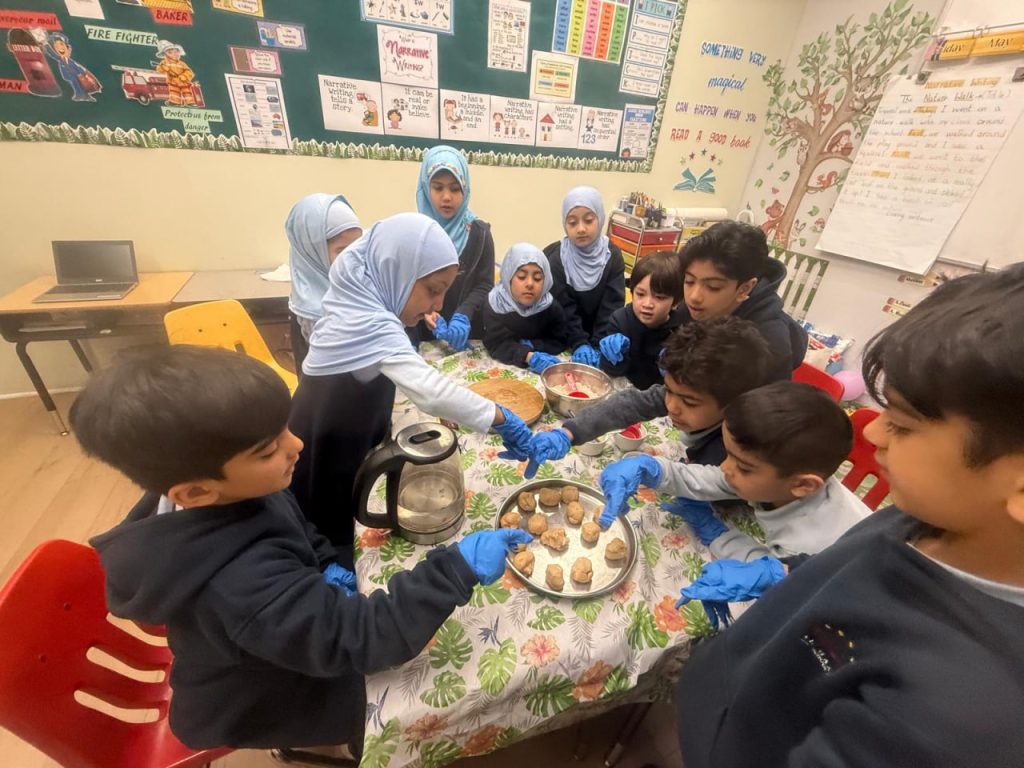 Together, these principles guide our efforts to nurture students who are intellectually capable, spiritually grounded, ethically principled, and committed to serving others. We aspire to cultivate graduates who understand that education is not merely preparation for a career, but preparation for a life of meaningful service to Allah, humanity, and creation. As the Prophet Muhammad (p) taught:
“The most beloved people to Allah are those who are most beneficial to people.”
For more extensive details on our school philosophy, the six dimensions of holistic development we nurture at Al Haadi School, as well as discussions on Muslim identity, please head over to our Publications section.